

“AI is first and foremost a tool.” Jérôme Ribeiro, Founder of Human AI
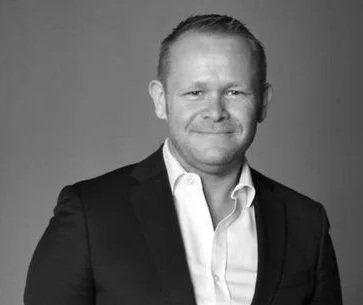
Jérôme RIBEIRO, founder of Human AI
It is with great pleasure that I welcome Jérôme Ribeiro, founder of Human AI.
LinkedIn:
Part I:
Introduction
Alexandre MARTIN — Times of AI™
Hi Jérôme, could you introduce yourself to Times of AI™ listeners and tell us about your professional background and current activity? Where does your interest in artificial intelligence (AI) come from?
Jérôme RIBEIRO — Human AI
I am an entrepreneur in the field of artificial intelligence, engaged both in the private sector through Human AI, and in the associative and institutional sphere.
I began my professional career within a telecommunications operator, an experience that proved highly structuring. It exposed me early on to large-scale infrastructures, data flows, connectivity challenges, and the strategic role of technology in economic and social development. This foundation profoundly shaped my understanding of digital transformation and technological sovereignty.
The decisive moment in my commitment to artificial intelligence occurred when Marco Landi, former worldwide President of Apple, invited me to join the Institut EuropIA, where I later served as Vice-President.
This step deeply structured my vision and reinforced my conviction that artificial intelligence is not merely a technological breakthrough, but above all a societal project—one that must be carefully designed, governed, and resolutely placed at the service of humanity.
My interest in AI is first and foremost societal and human: how this technology can enhance human capabilities and help address the major challenges facing humanity.
It is also strategic and geopolitical, as nations that master their data and AI technologies will secure their sovereignty and shape their future.
Finally, it is economic, since AI represents a major driver of development for countries capable of controlling their data, technologies, and skills.
One of my current flagship projects is the organization of the JIA 2026 — Journées de l’Intelligence Artificielle in Libreville, Gabon.
This initiative is part of a broader dynamic aimed at contributing to Gabon’s national artificial intelligence strategy and data governance framework.
My central objective is to educate, train, transfer knowledge, and build skills among Gabonese citizens, enabling them to master AI, work from their own country for global markets, and contribute to their nation’s international influence.
The pillars of this vision are clear: sovereignty, human empowerment, impact, and control of the future by people—not by algorithms.
Part II:
Artificial Intelligence (AI)
Alexandre MARTIN — Times of AI™
Question 2 — How do you define artificial intelligence?
Jérôme RIBEIRO — Human AI
In my view, artificial intelligence must be approached through a philosophical, societal, strategic, and pedagogical lens, while remaining technically accessible.
AI is first and foremost a tool.
It becomes a powerful decision-support lever when the underlying data is reliable, high-quality, and properly governed.
It is also a human capability accelerator, designed to augment human intelligence rather than replace it.
At the same time, it represents a major risk that must be controlled, as poorly governed AI systems can amplify inequalities, biases, and geopolitical imbalances.
Alexandre MARTIN — Times of AI™
Question 3 — In your professional activity or in your company, do you use Large Language Models (LLMs)? In what contexts do you use LLMs?
Jérôme RIBEIRO — Human AI
Yes, I use Large Language Models (LLMs) in my professional activities.
They are mainly used to:
Structure and clarify complex ideas;
Ensure that no strategic dimension is overlooked;
Support decision-making;
Automate repetitive or low-value tasks.
These tools are developed for our own specific uses, based on open-source foundations, and deployed within controlled environments.
Data sovereignty, transparency, and trust are non-negotiable principles.
Alexandre MARTIN — Times of AI™
Question 4 — What is your point of view on AI Agents and Agentic AI?
In your professional activity or in your company, do you use AI Agents and Agentic AI? Why?
Do you see potential for businesses in the use of AI agents and AI agents? Why?
Jérôme RIBEIRO — Human AI
Our teams have already designed, tested, deployed, and advised on AI agents within both public and private organizations.
In companies, these AI agents play a structuring role in the transmission and appropriation of internal knowledge. In particular, they enable:
Continuous training on internal processes;
Support for understanding job roles, workstations, and business tools;
Immediate answers to internal operational questions (procedures, rules, organization, internal reference frameworks);
Assistance with drafting and structuring internal documentation;
Improved operational efficiency, without any loss of human know-how.
These agents do not replace employees; they assist them, secure their work, and help them upskill.
I strongly believe in the value of AI agents for businesses, provided they remain supervised assistants, not autonomous decision-makers.
Regarding contextual AI, this is, in my view, a fundamental issue.
Contextual AI means AI that is rooted in local realities—cultural, linguistic, economic, and social.
It is a major sovereignty issue for Africa. When projections indicate that up to 85% of global extreme poverty could be concentrated on the African continent, it becomes imperative that AI addresses African challenges by fully taking into account local cultures, languages, and socio-economic realities, rather than relying on imported, standardized, and disconnected models.
Part III:
The Future of AI
Alexandre MARTIN — Times of AI™
Question 5 — Questions about Artificial General Intelligence (AGI)
Do you think AI systems will be able to achieve a level of autonomy? Why?
Jérôme RIBEIRO — Human AI
I believe that Artificial General Intelligence (AGI) is inevitable, as it is driven by human ambition and intent.
However, I am firmly convinced that humans must remain at the center.
AI autonomy may be:
Operational;
Decision-related;
Strategic.
but it must never be absolute, irreversible, or uncontrolled.
Alexandre MARTIN — Times of AI™
Question 6 — Do you use generative artificial intelligence?
Jérôme RIBEIRO — Human AI
Yes, I would consider the use of generative artificial intelligence, but only under strict conditions:
No irreversible decision without human validation;
No AGIoutside state or institutional oversight;
No opaque, proprietary generative artificial intelligence systems;
No AGI without clear, sovereign, and responsible data governance.
Generative artificial intelligence must remain supervised, traceable, and fully accountable.
Alexandre MARTIN — Times of AI™
Question 7 — Emerging trends
Jérôme RIBEIRO — Human AI
I believe several trends can prove sustainable:
Sovereign AI;
Frugal and resource-efficient AI;
Contextual AI;
Intelligent agents;
Human—AI hybrid models.
On one essential condition: permanent human supervision.
Alexandre MARTIN — Times of AI™
Question 8 — The ideal evolution of AI
Jérôme RIBEIRO — Human AI
The ideal AI would be simultaneously:
Useful;
Understandable;
Controllable;
Fair;
Sovereign.
Its ultimate purpose must be to enable individuals and nations to regain control over their future, rather than delegating it to opaque technological systems.
Part IV:
AI Regulation
Alexandre MARTIN — Times of AI™
Question 9 — Should AI be regulated?
Jérôme RIBEIRO — Human AI
Yes, AI regulation is necessary and indispensable.
Without regulation, artificial intelligence becomes a systemic risk.
However, regulation must be pragmatic, so as not to stifle innovation, and conceived as a lever of sovereignty, particularly for African states.
AI is an extremely powerful tool: in the wrong hands, it can become destructive.
Alexandre MARTIN — Times of AI™
Question 10 — What is the most effective regulation?
Jérôme RIBEIRO — Human AI
Each region of the world should develop its own sovereign AI regulatory framework, while ensuring international interoperability.
The European AI Act provides a solid foundation, but remains insufficient for Africa, as it does not fully account for the diversity of the continent’s cultural, economic, and social realities.
The most effective regulation rests on:
A clear legal framework,
A strong human governance,
And severe sanctions when red lines are crossed.
Ultimately, the best regulation is one that places humans at the center, protects societies, and ensures that artificial intelligence remains a tool in the service of the common good.